

The First Time We Almost Lost Him If not for the dedicated participants of the Framingham Heart Study—and the medical advances their commitment inspired—I wouldn’t have my dad today.
In November 1976, my parents were heading to a friend’s funeral after his sudden massive stroke. That morning, Dad felt unwell with unusual back pain. After picking up out-of-town friends at Dallas Love Field, they stopped at the country club for lunch. The pain intensified. Mid-meal, Dad excused himself for a massage in the men’s locker room, thinking it was a pulled muscle. It didn’t help.

first heart attack. Family photo.
At the funeral, his condition worsened. A friend drove to the graveside as Dad grew ashen, sweaty, short of breath, and in agony. He leaned over, head in Mom’s lap. Everyone knew: hospital next.
In the ER, when asked what brought him in, Dad replied, “I think I’m having one hell of a heart attack!”
He was. Cardiac catheterization revealed his left anterior descending artery—the heart’s “widow-maker”—was 100% blocked. Blood flow to much of the left ventricle had stopped; the front wall was dying. Nothing could be bypassed surgically.
That night in the ICU, alarms sounded. His heart stopped. A nurse rushed in for CPR. Dad regained consciousness as they pounded his chest. He survived the critical days that followed, though survival data from the era were grim: fewer than one-third of in-hospital cardiac arrest patients requiring CPR were discharged alive. His long-term prognosis was poor.
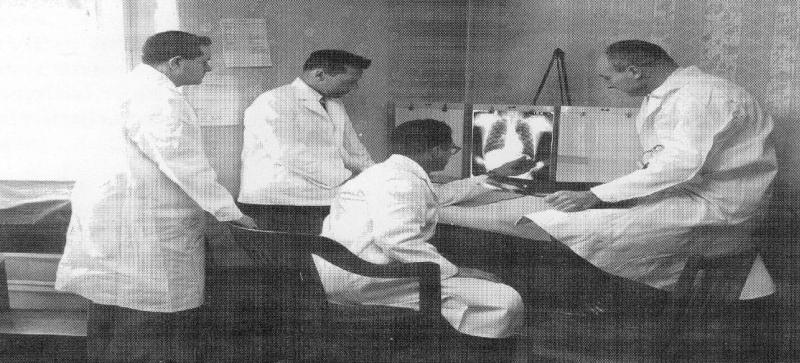
The People of Framingham Step Up for Science Decades earlier, in 1948, the National Heart Institute (now NHLBI) partnered with Boston University to launch the Framingham Heart Study. They recruited 5,209 men and women from the small town of Framingham, Massachusetts—over half the eligible residents volunteered. The goal: uncover the causes and progression of cardiovascular disease, about which little was known.
Unlike many studies where participants drop out, Framingham’s volunteers remained committed. They returned every two years for exams, questionnaires, labs, and tests. Today, three generations participate, including diverse cohorts, to address health disparities. This multi-generational data has revealed genetic influences, enabling earlier, targeted interventions.
Over 1,200 papers have resulted, transforming cardiology worldwide—from risk factors to prevention guidelines.
Am I Predestined? Or Free to Choose?
by Craig Reid (Author)
Buying products using the links in this website provides the support we need to keep providing you with great content. Thank you!
Identifying Risks and Developing Solutions Dad was 41 when he had that first heart attack—I was just 10. A driven “Type A” executive (chairman and president of a bank holding company and commuter airline), he smoked cigarettes and cigars like many of his generation.
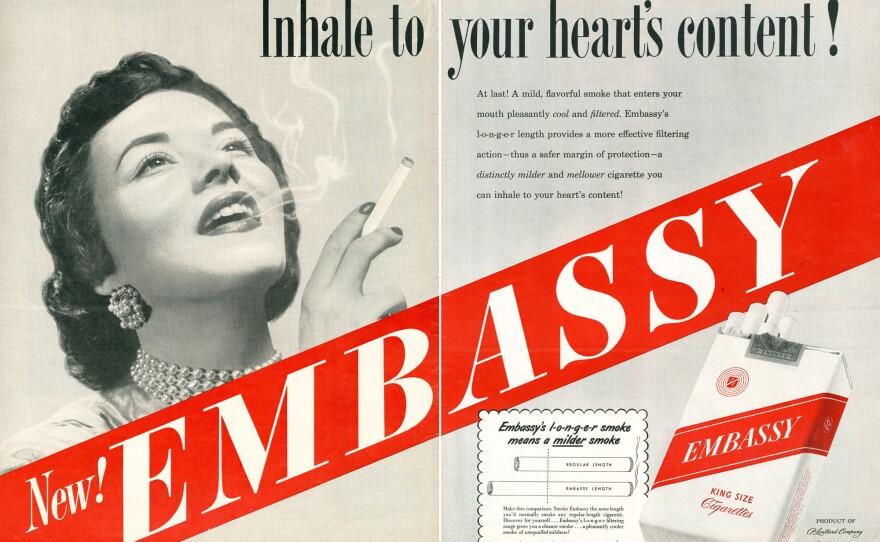
But he paid attention to emerging science. In 1960, Framingham researchers linked cigarette smoking to increased heart disease risk—a finding that fueled the 1964 U.S. Surgeon General’s landmark warning. Dad quit smoking years before 1976. It likely made the difference in his survival.
Framingham also identified high blood pressure and elevated cholesterol as major risks (reported as early as 1957–1961). These insights spurred decades of medication advances—better antihypertensives, statins, and targeted therapies. Post-1976, Dad reduced work stress, focused on diet and exercise (inspired by emerging cardiac rehab guidelines), and benefited from evolving treatments.
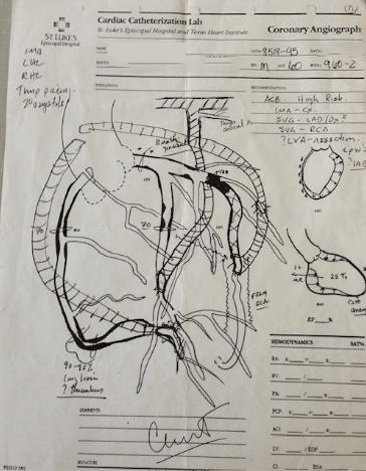
Benefiting from the Evolution of New Discoveries Heart disease isn’t cured—it’s managed. In 1995, Dad suffered a second heart attack and congestive heart failure. Angiography showed severe progression; his heart stopped again during the procedure but restarted spontaneously. The next day, he underwent four-vessel bypass surgery, including the removal of a large left ventricular aneurysm from scar tissue.
By then, Framingham-informed guidelines—combined with newer meds, cardiac rehab, and lifestyle focus—offered real hope.
In 2006, arrhythmias led to an implantable cardioverter-defibrillator/pacemaker. Over the years, as older drugs maxed out, newer ones improved function and quality of life.
In May 2021, amid florid heart failure, a cardiologist found a fixable blockage in one remaining bypass graft and placed a stent. Ejection fraction rose from <20% (dire) to >30% (manageable). Drugs like Entresto and Farxiga followed, each extending time we thought was limited.
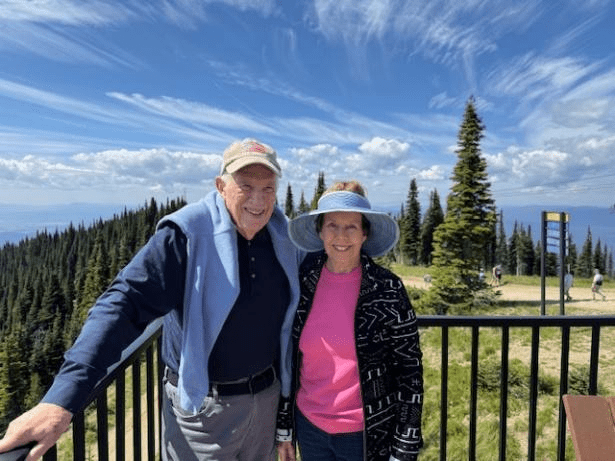
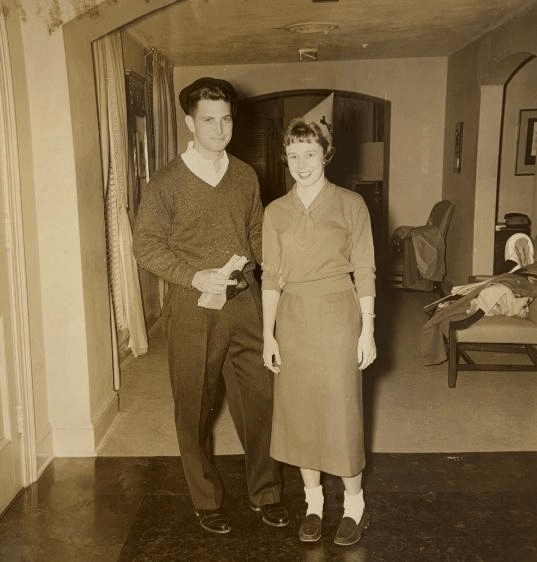
Right image: My parents hiking in
Whitefish, Montana in 2025. Family
photos.
The Impact Framingham Families Have Had on My Family Last October, Dad turned 90—nearly 49 years since that first heart attack. We’ve had decades more than expected with him: seeing four children marry, welcoming 12 grandchildren and three great-grandchildren, and sharing life with Mom.
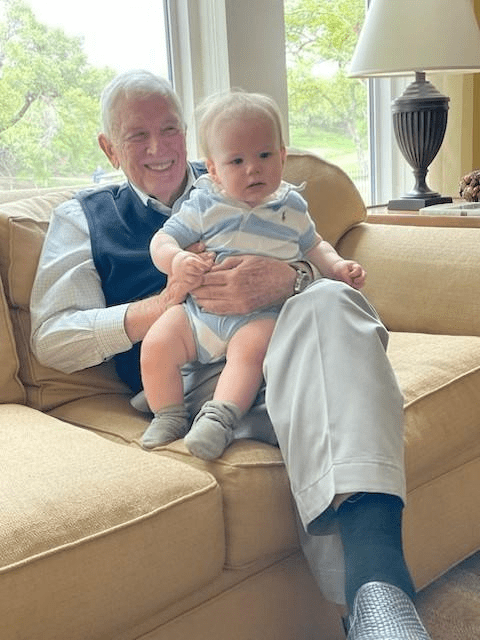
Dad has ridden the wave of advancements born from Framingham’s extraordinary participants. Their willingness to volunteer since 1948 has given millions longer, healthier lives—including nearly five extra decades with my father.
Thank you, Framingham families. You changed our world.
More information: Framingham Heart Study. For medical providers, epidemiologists, and researchers who want a deeper dive into the data, check out “The Framingham Study: An Epidemiological Investigation of Cardiovascular Disease” (Classic Reprint) by the U.S. Department of Public Health.
Photo Credits Personal/family photographs and images ©Ashley Creek Publishing, LLC, various years. Historical images courtesy of public domain sources (NIH/U.S. Government archives).
Disclaimer Advertisements may appear in this article or on the Ashley Creek Publishing website. This is not necessarily an endorsement of any product or service by the author or Ashley Creek Publishing, LLC.
